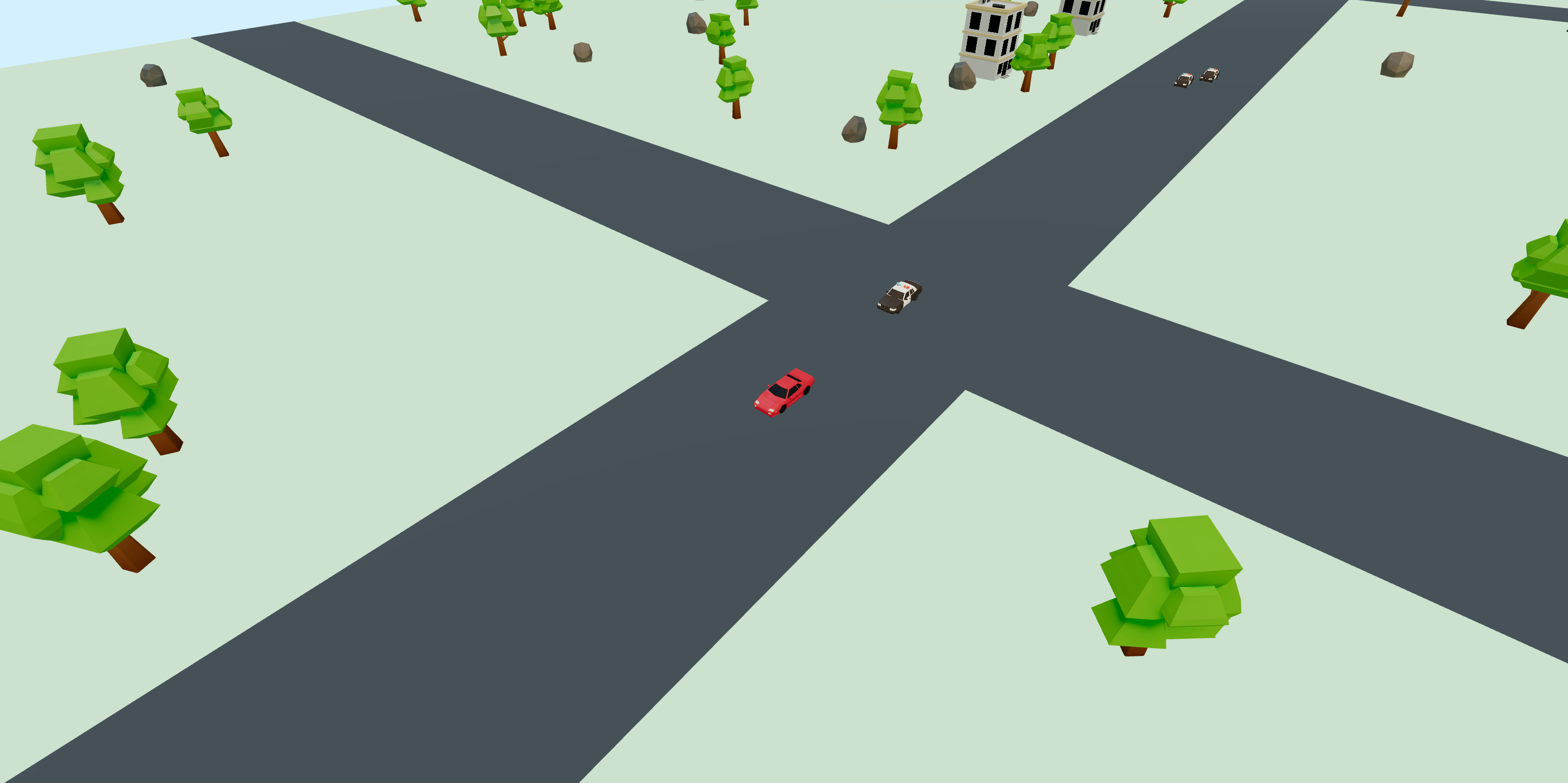
A browser-based 3D car chase game built with Three.js — weave through a low-poly city while police cars close in, with a survival score that ramps up the tension.
Road Rogue is a 3D car chase game inspired by Smashy Road, built as part of a design course exploring AI-assisted creation. The brief was open: use AI tools to design and build something interactive. The result is a browser-based car chase — drive a getaway car through a low-poly city while police vehicles pursue you, survive as long as you can.
The project was fully vibe-coded: 3D assets generated with Meshy (text-to-3D AI), game logic scaffolded and debugged with Codex (OpenAI's coding model), and the whole thing wired together with Three.js. The workflow was more like directing than programming — describing what you want, evaluating the output, steering toward something that feels good.
The tools shaped the process as much as the concept did. Rather than modelling assets by hand or writing every system from a blank file, the workflow leaned into AI generation at each stage:
Using AI tools throughout the build changes the nature of the work — less typing, more deciding. The challenge shifts from "how do I write this" to "is this the right thing to build, and is what was generated actually correct." Codex can produce plausible-looking game logic that has subtle bugs; catching those requires understanding the system well enough to evaluate the output, which means you still need to understand the domain.
Meshy's text-to-3D output is stylistically unpredictable — the same prompt can produce wildly different geometry across generations. Treating it like a creative tool rather than a reliable fabricator worked better: generate many options, pick what fits the aesthetic, discard the rest. The low-poly city style emerged partly from what Meshy does well rather than from a fixed upfront vision.
The honest conclusion: vibe-coding gets you to a working prototype much faster, but the quality of the result still depends entirely on how clearly you can articulate what you want and how critically you can evaluate what you get.